About Me
Hi there! My name is Jackson Fulmer, and my hometown is Oxford, Alabama. I am a recent graduate from the University of Alabama, where I received a bachelor's degree in communication and information sciences. During my time at the University of Alabama, I took a variety of courses that helped me develop an understanding of professional communication as it relates to organizations and the communities around them. I've spent the past few years working and expanding my knowledge of different industries. As of this year, I have accepted a job offer with Delta Air Lines, headquartered in Atlanta, GA, as a mainline flight attendant. I will be based in Delta's New York City hub at John F. Kennedy International and LaGuardia Airport, where I will be flying both domestic and international flights. I hope to further my life experiences with the many journeys that lie ahead.
 |  |  |  |
|---|---|---|---|
 |
"It's really important to be disruptive and do things that actually are kind of a little scary and bold."
- Christopher Bailey, CEO, Burberry
Visual Communication Spotlight

Professional Relationships
As someone with a background in communications, I understand the importance of professional relationships in achieving success in any business, organizational setting, or industry. Effective communication is the foundation of maintaining professional relationships, whether it's with colleagues or clients. It involves not just the exchange of information, but also active listening, empathy, respect, and mutual understanding. In my experience, good communication skills can help establish trust, credibility, and a sense of collaboration, all of which are critical to building long-term professional relations.
In terms of interpersonal communication, I've found that being approachable and showing genuine interest in others is key to building strong relationships. For instance, when working in teams during courses such as COM 220 (Interpersonal Communication), I made an effort to listen to everyone's ideas and perspectives, and I always tried to provide feedback that was effective, constructive, and respectful. Similarly, when dealing with clients or customers during my professional experience as a leasing consultant, I put myself in their shoes to understand their needs and expectations. In doing so, I was able to tailor my communication style and approach to meet their specific needs, which can go a long way in building trust and loyalty.
In organizational communication, I recognize the importance of clear and concise messaging to ensure that everyone is on the same page. When working on projects in courses such as COM 350 (Organizational Communication), I ensured that everyone who was involved, including myself, had a clear understanding of their roles and responsibilities, as well as the goals and objectives of the project. This can help establish that everyone is working towards the same end goal, which can lead to more successful outcomes. Additionally, in business professional communication, I understand the importance of maintaining a professional tone and demeanor at all times, whether it's through email, phone, or in-person interactions, thanks to my experience in courses such as COM 352 (Business Profesional Communication) and in my role as a leasing consultant for a national property management company. I ensure that I am always respectful, courteous, and professional, which can help build a positive reputation and rapport with colleagues, clients, and customers alike.
Engaging Diversity
Understanding the importance of engaging diversity is important in all forms of communication. This means creating an environment where people of all backgrounds feel welcomed, respected, and valued. Engaging diversity requires recognizing and appreciating differences, and actively working towards creating inclusive communication spaces. For example, this can mean incorporating diverse perspectives into messaging, ensuring that communication is accessible to all individuals, and using inclusive language that is respectful of all identities and backgrounds.
In my experience from taking courses such as COM 413 (Communication and Diversity), engaging diversity requires a commitment to ongoing learning and education. As a communication professional, it is important to continually seek out opportunities to learn about different cultures, identities, and perspectives. This can involve attending diversity training programs, which I did during my time as a leasing consultant, and workshops, reading literature from diverse authors, and engaging in dialogue with individuals from different backgrounds.
By doing so, we can better understand the unique needs and experiences of others, and work towards creating more inclusive and effective communication strategies.
Leadership
A good leader must possess strong communication skills in order to effectively convey their vision and goals to their team, stakeholders, and audiences. A leader must also be able to listen to and consider different perspectives, manage conflict, and inspire and motivate their peers toward a shared goal. In my experience as a leasing consultant and a student in courses such as JCM 180 (Journalistic Principles and Practices) and JCM 315 (Advanced News Writing), leadership is about creating a culture of collaboration, trust, and respect, which fosters effective communication and ultimately leads to successful outcomes.
I have worked in numerous settings to develop communication strategies that align with certain goals, both at work and in my educational experience. To do this effectively, I had to be a strong leader, able to guide myself and others toward effective communication and writing practices that inspire actions toward goals that represent facts and the truth. By communicating clearly and collaboratively with others, I am able to build trust and credibility, and ultimately achieve the desired outcome.
Leadership is about taking a stand and not fearing what the truth holds. During my time writing news articles, I learned that not everyone will like what it is you are reporting on, but it takes a leader to showcase all sides of a story and report on important matters that affect all communities.
Capstone Research Project
In-Flight Communication: Strategies and Models for Flight Attendants to Use to Manage a Positive Passenger Experience
This research explores the aviation industry and the roles of flight attendants. In recent years, matters of conflict have arisen between passengers and crew members. Within these conflicts are communication challenges that flight attendants face when dealing with irate passengers. This project aims to develop new strategies and models that flight attendants can use during extreme moments of conflict, with the goal of conveying messages to passengers that takes into account cultural and stereotypical ideals that could impact the communication process. Different communication theories are explored to showcase the many approaches that flight attendants can use in their strategies to address passengers. A short study was conducted to better understand the rise of issues between passengers and crew members, and to explore what opinions frequent flyers have toward flight attendants. These results, with the help of different communication theories, led to the creation of a model that addresses these conflict situations in a post-pandemic society. This model focuses on the framework of intercultural communication in an organizational setting. The research question for this study is: What communication strategies can flight attendants use to manage conflicts and convey messages to passengers during extreme moments of friction? By exploring the communication strategies used by flight attendants in conflict situations, this study will contribute to the development of effective training programs and policies that support the safety and well-being of passengers and crew members.
Complete Capstone Research Project:
Introduction:
As a newly hired flight attendant for Delta Air Lines, my position with the company requires me to interact with thousands of travelers, some of whom may be exhausted and quick to be impulsive and impatient. These conflict situations can lead to disputes that may cause safety concerns for crew members and other passengers. As a soon to be communication studies graduate, I aim to investigate and develop communication strategies and models that flight attendants can use to manage matters of conflict and convey reasonable messages to passengers during extreme moments of friction. In the post-pandemic industry of aviation, there has been a rise in ‘air rage’. Stereotypes and cultural ideals in and around the industry can be analyzed to find different methods and models to address these conflicts. This project aims to explore the professional and communication backgrounds of flight attendants, explore the different difficulties that flight attendants face, and deliver a method and model that can be used to better communication strategies and results.
Understanding the Post-Pandemic Aviation Industry:
There has no doubt been a rise in ‘air rage’ amongst passengers in the aviation industry. These conflict situations come with airlines trying to manage a post-pandemic society that was required to follow protocols relating to new health and safety regulations. These regulations included masks required to be worn by all passengers and crew, some airline employees required to be vaccinated, and a limit to how many seats can be sold to passengers in order to limit the number of people on an aircraft (FAA, 2020). On top of these required regulations that created high tensions, the airline industry suffered a 96% loss in passenger traffic compared to 2019. (Government Accountability Office, 2021). With all of the new health and safety regulations and a loss in profits for the airline industry, many airlines had to lay off over half of their workforce, which included flight attendants. During the start of the pandemic, most airports, international and domestic, experienced an 80% restriction rate on international flights (Aislelabs, 2020). This inevitably created a situation where flying was not only stressful but incredibly difficult. On social media, the world began to see the difficulties of flying and how some passengers were delinquent in following mask mandates. This resulted in many passengers being kicked off flights, put on the no-fly list, being duck taped to their seats, flights being forced to turn around, and flights being outright canceled. The Hill reports that “over 6,000 passengers have been placed on the airline no-fly list for exhibiting aggressive behavior during flights, including being unwilling to abide by the federal transportation face mask mandate” since the start of the COVID-19 pandemic (Jacobson, 2022). How has the aviation industry changed since the pandemic, and what types of challenges do flight attendants face when dealing with unruly passengers? Cultural shifts for what is considered acceptable in public have changed over the past three years, and this can be seen on social media platforms where viewers witness people having public ‘freakouts’ on airplanes. This shift has changed the way flight attendants communicate and interact with passengers.
Flight Attendant Strategies:
There are different types of strategies flight attendants learn in training while also bringing some important personal skills into the mix. Flight attendants are taught to handle situations such as water landings while also learning important safety rules and regulations relating to Federal Aviation Administration and Department of Transportation protocols.
Some flight attendant protocols include practical skills such as obtaining a first aid and CPR certification. Flight attendants must also be able to lift large items, serve meals and drinks to passengers, deal with emergency medical situations, handle passenger disturbances, and even operate aviation instruments accordingly during emergency situations (Cabin Crew HQ). Flight attendant training also includes understating common laws and rules pertaining to international regulations.
Poor communication strategies related to dealing with passengers, safety briefings, and communication with co-workers can result in negative conditions. Therefore, it is important that flight attendants can effectively communicate. Communication training is a required objective that flight attendants must learn. Many flight attendants must take a CACCT (Communication for Airline Cabin Crew Training) cabin crew class before they can graduate training. This includes customer service communication that can help flight attendants during their time working. Role-playing certain scenarios can also help flight attendants.
Communication Theories:
Different communication theories can help flight attendants on the job. These theories relate to rhetorical and communication studies. Face-negotiation theory is a communication theory that is complex and important in understanding different cultural contexts. This understanding of one’s sense of self and others is important for flight attendants who deal with different types of people each day. In their chapter titled, “The Matrix of Face: An Updated Face-Negotiation Theory,” Stella Ting-Toomey, who developed face-negotiation theory, writes, “Culture affects communication, and communication affects culture (Hall, 1959, 1976). It is through communication that culture is learned, modified, and passed down from one generation to the next. Intercultural conflict takes place when our cultural group membership factors affect our conflict process with a member of a different culture on either a conscious or unconscious level” (Ting-Toomey, 2005, p. 72). Different members of different cultures may convey different messages of expressions in conflict situations. Understanding these intercultural conflicts is essential for flight attendants to correctly apply strategies that are appropriate and work.
Research and Results:
To better understand the different approaches flight attendants use with passengers while flying, a qualitative study must be conducted in order to know what crew members think, what they are dealing with, and the processes used in their approach to handling certain situations. Passengers must also be examined to ensure there are no one-sided arguments, and to have an understanding of what leads to these matters of conflict and ‘air rage’. These results can not only build on needed information, but they can give an understanding for developing new communication theories that answer the question: What productive communication strategies can flight attendants use to manage conflicts and convey messages to passengers during heavily extreme moments?


These results suggest that there is a rise in ‘air rage’, and that a significant portion of flyers do not have a positive opinion about flight attendants and their work as it relates to their communication practices and their usefulness. Based on these findings, it is important to develop an effective set of ideas, theories, and models that can help flight attendants understand passengers and limit any negative notions toward them.
The Role of Stereotypes and Culture in a Professional Settings:
Stereotypes are beliefs about individuals and communities that may not be entirely true. To overcome stereotypical beliefs when dealing with clientele, flight attendants must understand that there are more than likely held stereotypes about them that the person they are interacting with holds. Though this is not always the case, flight attendants must understand their duties and refrain from holding any stereotypes about certain individuals. Serotyping people can only lead to negative consequences. A new model must be made that addresses serotyping in order to positively handle conflict situations.
The Cultural Practices of Diverse Stereotypical Settings Model:
Many people have different traditions, languages, customs, and practices that they share with a specific community. In different fields of work, many individuals will have to interact with others that have different backgrounds. Stereotypes, which have been used to marginalize certain people in society, should be challenged so that there is respect for two or more individuals that must interact with one another. Building a stronger relationship with those whom someone not only works with but interacts with on a different basis creates an inclusive setting where certain tensions can be eliminated, allowing for a better understanding of any issues that arise.
This theory’s day-to-day usefulness lies in the framework of empathy and inclusion. Sometimes, in a workplace setting, conflicts appear. In order for individuals to handle these conflicts so that they do not reflect badly on them, these individuals must promote inclusive communication messages that overcome stereotypes, build strong relationships, and effectively inform important information. According to Milton Bennett in their journal titled, “Intercultural Communication: A Current Perspective,” Bennett writes, “The less obvious aspect of culture is its subjective side—what we can call “culture writ small.” Subjective culture refers to the psychological features that define a group of people—their everyday thinking and behavior—rather than to the institutions they have created. A good working definition of subjective culture is the learned and shared patterns of beliefs, behaviors, and values of groups of interacting people. Understanding subjective cultures—one’s own and others’—is more likely to lead to intercultural competence” (Bennett, 1998). Intercultural communication and its different perspectives are steppingstones for the professional side of this empathetic communication theory that addresses a need for relaying messages to others, who may be culturally different, without causing friction.
In summary, the cultural practices of diverse stereotypical settings model first acts to eliminate any stereotypical opinions that one may have about an individual they are interacting with, then to remember practices of empathy and compassion, next to effectively understand what is being communicated between two individuals, and lastly relay a message of sensitivity, that takes into account different cultural practices, limiting any rise in conflict or challenges.
Summary:
Flight attendants deal with an industry that is very different compared to other work industries. A pandemic, which affected the aviation industry greatly, caused many tensions to arise among passengers and crew members. On top of dealing with the pandemic, flight attendants have to be extremely aware of safety procedures, laws, regulations, and customer service strategies. Sometimes communication tactics previously used when dealing with irate passengers have become useless in handling conditions where conflicts are so great. Understanding communication theories and practices, such as face-negotiation theory, elaboration likelihood model, social learning theory, uncertainty reduction theory, and constructivism, can help flight attendants better understand the situation they are in, and how to interact with, handle, and manage conflict situations. My findings show that flight attendants “love” their job, but ‘air rage’ has changed the industry. There is also a significant portion of flyers that do not have a positive view of flight attendants, making in-flight issues more combative. These findings, along with other communication theories, led me to develop a model called the cultural practices of diverse stereotypical settings model, which is useful for flight attendants who work in an ever-changing industry that is diverse, culturally different, and stressful at times. Handling conflict situations with empathy, understanding, and importance can relieve any misunderstandings or stereotypes that will only cause greater friction in a conflict.
References:
Coronavirus (COVID-19) Information from FAA. (2020). Federal Aviation Administration. https://www.faa.gov/coronavirus
U.S. Government Accountability Office. (2021, November 9). Covid-19 pandemic: Observations on the ongoing recovery of the aviation industry. U.S. GAO. https://www.gao.gov/products/gao-22-104429
Santos, D. (2020, May 4). How Airports Globally are Responding to Coronavirus. Aislelabs. https://www.aislelabs.com/blog/2020/03/27/how-airports-globally-are-responding-to-coronavirus-updated-frequently/
Jacobson, S. H. (2022, February 2). Pandemic travel highlighted ‘air rage’ and the need for a national no-fly list. The Hill. https://thehill.com/opinion/technology/595177-pandemic-travel-highlighted-air-rage-and-the-need-for-a-national-no-fly/.
Moss, P. (2023, March 18). What are the chances of getting hired as a flight attendant?. Executive Flyers. https://executiveflyers.com/what-are-the-chances-of-getting-hired-as-a-flight-attendant/
14 CFR § 91.533 Flight attendant requirements. Cornell Law School. Legal Information Institute. (n.d.). https://www.law.cornell.edu/cfr/text/14/91.533
Communication for airline cabin crew training (2023). SSLC Sprott Shaw Language College. https://www.studysslc.com/communication-for-airline-cabin-crew-training/
5 Tips to be Successful in Flight Attendant Training (2020, February 10). Commute Air. https://www.commuteair.com/2020/02/10/5-tips-to-be-successful-in-flight-attendant-training/
Ting-Toomey, S. (2005). The Matrix of Face: An Updated Face-Negotiation Theory. Theorizing About Intercultural Communication, 71–74.
O’Keefe, D. J. (2013). The Elaboration Likelihood Model. The SAGE Handbook of Persuasion, (2), 137–147.
Bandura, A. (1969). Social-Learning Theory of Identificatory Processes. Handbook of Socialization Theory and Research, 213–255.
Gudykunst, W. B., & Nishida, T. (1984). Individual and cultural influences on uncertainty reduction. Communication Monographs, 51(1), 23–36. https://doi.org/10.1080/03637758409390181
Powell, K. C., & Kalina, C. J. (2009). Cognitive and Social Constructivism: Developing Tools for an Effective Classroom. 130(2), 241-249. https://docdrop.org/static/drop-pdf/Powell-and-Kalina-U6g4p.pdf
Bandura, A. (2001). Social Cognitive Theory of Mass Communication, Media Psychology, 3(3), 265-299. DOI: 10.1207/S1532785XMEP0303_03
Bennett, M. J. (1998). Intercultural Communication: A Current Perspective. Basic Concepts of Intercultural Communication: Selected Readings, 1–20.
Sources:
Ke’Asia D. dowdell.keke1@gmail.com
Ally M. (864) 517-8165
Madison B. (618) 550-6545
Lauren L. (618) 558-8463
Sarah M. (404) 314-6352
Rachael J. (815) 780-0089
Anna L. (337) 257-5088
Kelsey M. (256) 668-9464
Kevin T. (616) 902-6528
Eve R. eve.rogers@delta.com
Courtney B. courtney.benning@delta.com
Articles & Media


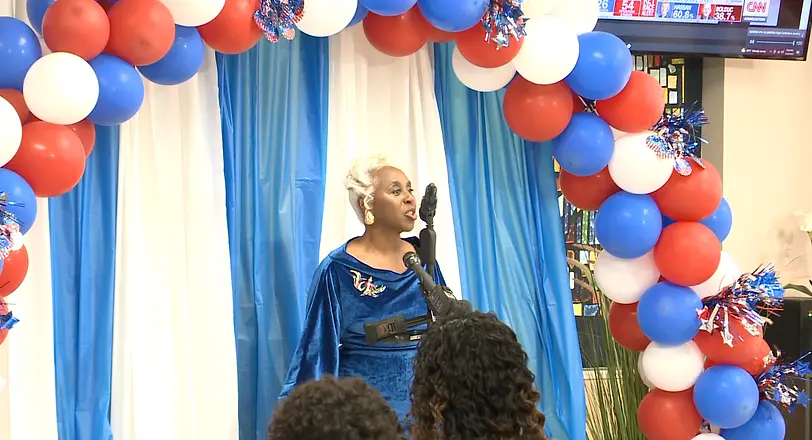
‘Our candidate is in tears’
Yolanda Flowers speaks to supporters at a campaign rally
EUTAW, Ala. – Yolonda Flowers, the Democratic candidate for governor of Alabama, spoke to supporters last Sunday at the Robert Young Community Center in Eutaw, Alabama. This campaign rally was hosted by the Greene County Democratic Executive Committee. During the event, Flowers doubled down on her stance to expand Medicare and Medicaid across the state, along with clarifying her position on issues from abortion to education. Flowers also informed supporters about her campaign’s financial problems.
“Our candidate is in tears. We must help her,” said Joe Webb, pastor at the New Generation Church in Eutaw. Webb added there is no reason why the first Black woman to be nominated for governor of Alabama has no money left this close to election day.
Flowers, who won her nomination in June after the primary election went into a run-off, is the first Black woman to be nominated by a major party for governor of Alabama. Though her win is historic, Flowers claims that she has received barely any money from the state or national Democratic party.
“I have received no money from the DNC, and officials from the state [Democratic] party told me there is no more money left,” said Flowers. Flowers also said she spent all her savings and the life insurance money she received when her partner passed last year.
Representatives for the Alabama Democratic Party did not respond to requests for comment.
Officials from the Greene County Democratic Executive Committee had to apologize to both Flowers and her supporters during the campaign rally for the absence of multiple state legislators that were supposed to be in attendance. These Democratic state legislators are:
Senator Bobby Singleton (AL - District 24)
Representative Ralph Howard (AL - District 72)
Curtis Travis, who beat Ralph Howard in the Democratic primary for Alabama House of Representatives District 72, was also supposed to be in attendance. Green County Commission Co-Chair Allen Turner apologized to everyone at the rally for those legislators’ who were absent.
Officials for both Senator Bobby Singleton and Representative Ralph Howard did not respond to requests for comment.
“How do they [Democratic party/candidates] expect us to support and give them money when they won’t even show up or help the people were trying to get elected,” said Loretta Wilson, a resident of Eutaw.
Supporters at the campaign rally did not let some of this negative news from their representatives or candidates get them down. The event started with a prayer led by Kendrick Howell, pastor at Little Zion Baptist Church in Tishabee, Alabama. Howell also led a musical selection.
State, local, and Democratic party officials, along with Flowers and local pastors, at the rally all agreed to hold a meeting after the event was over to figure out a plan as to what they can do to raise money for the Yolonda Flowers campaign for governor.
City of Eutaw Mayor Latasha Johnson said, “People need to get out to vote and make history this November.”
-30-
Joe Webb (205) 708-2129
Yolonda Flowers (205) 563-0382
Loretta Wilson (205) 372-3514
Latasha Johnson (205) 372-4212
Young voters may be shifting toward Democrats in the upcoming midterm elections
By Jackson Fulmer
TUSCALOOSA, Ala. Many young voters are leaning towards Democrats in the upcoming 2022 midterm elections in wake of the Supreme Court’s decision to overturn Roe v. Wade and the current events surrounding former President Donald Trump. In cities like Tuscaloosa, a large segment of the population is college students. The University of Alabama enrolled 38,320 students for the 2021-2022 school year. Over 57% of those students enrolled are from out of state, as reported by the university. Those out-of-state students vote in key race states like Georgia and Michigan.
Sarah McNulty, a senior from Georgia, said she doesn’t plan to vote for any Republican in the upcoming Georgia midterms. McNulty added that “Republicans should be worried because women are tired of their immorality. Look what happened to Sarah Palin.”
Sarah Palin lost her bid for Alaska’s congressional seat in the state’s recent special election to Democrat Mary Peltola. Palin, who was Alaska’s former governor, was endorsed by Donald Trump who won the state in the 2020 presidential election.
With recent polls showing Democrats holding onto the Senate, as the Wall Street Journal and the FiveThirtyEight reports, many voters are enthused to vote for Democratic candidates like Stacey Abrams and Yolanda Flowers.
“Alabama might be a Republican-held state, but Democrats are making history, and that’s important,” said Madison Brake, a graduate student from Alabama. Brake added that she’s excited to see Yolonda Flowers as nominee for governor of Alabama.
Yolonda Flowers made history in June when she won the race to be Alabama’s Democratic candidate for governor. Flowers is the first Black woman to be nominated for governor of Alabama by a major party.
Stacey Abrams is another gubernatorial candidate that has some Republicans worried. Young voters are expected to play a large role in the upcoming midterm elections, and in states like Georgia the contests are close.
“I voted for Stacey Abrams in 2018, and I will vote for her again,” said Andrew Mayne, a Graduate student from Georgia. Mayne also said he could never vote for a candidate who supports former President Donald Trump.
Top Republican leaders have been quiet or defensive of the former president’s recent scandals. With 60% of voters under 30 voting for now President Joe Biden over Trump, as the Roper Center for Public Opinion Research reports, Republicans could lose more seats to their Democratic opponents in November in part to the former president’s low approval.
The FBI seized thousands of government documents from Donald Trump’s Florida estate. In their August recovery, the FBI found 48 empty folders labeled “Classified.” These recent events, which could be legally challenging for the former president, could be bad for Trump-backed Republican candidates.
Young voters continue to play a large role in elections. Baby boomers are losing their hold on being the largest voting bloc, which over half of boomers voting for Republicans, but younger voters who tend to be more progressive will continue to change and shift politics
-30-
Sarah McNulty (404) 314-6352
Madison Brake (618) 550-6545
Andrew Mayne (770) 403-2315

Tuscaloosa City Council withdraws resolution revoking the business license of Masters Inn
By Jackson Fulmer
Masters Inn Tuscaloosa Friday, Feb. 18, 2022 (Photo by Jackson Fulmer)
TUSCALOOSA, Ala. – On Tuesday Evening, the Tuscaloosa City Council withdrew a measure to revoke the business license of Masters Inn. This comes after the former owner of Masters Inn surrendered his business license earlier this year.
“Ding dong, the witch is dead,” said Tuscaloosa City Council member Kip Tyner.
In December, the Tuscaloosa City Council announced that the former owner of Masters Inn must surrender his license by Feb. 15, 2022. Masters Inn has since been purchased by Richard Henry. Henry plans to convert part of the property into apartments. The Tuscaloosa City Council approved a proposal in January that now allows for the zoning area to become residential.
Mike Patel, the former owner of Masters Inn, said, “This was my business, and now I’m being forced to leave.” Patel declined to comment further.
For years Masters Inn has been under fire for numerous amounts of criminal activity, this includes prostitution rings. The property has been bought and sold by multiple owners in recent years. The Tuscaloosa City Council, along with local law enforcement have been trying to crack down on the situation surrounding the business.
“I’ve been there [Masters Inn] once, and I will never go back,” said Alabama native Sherry Jeffers. Jeffers later added that Masters Inn has been the biggest eyesore in the city for a long time.
Terry Jeffers, Sherry’s husband, said, “I’m glad that the city is actually doing something about this. Hopefully, it never goes back to the way it was.” Both Sherry and Terry Jeffers said they are hopeful about the new owner.
All seven members of the Tuscaloosa City Council voted yes to withdraw the measure against Masters Inn, anticipating that under new ownership, the property will thrive.
-30-
Mike Patel (205) 556-2010
Sherry Jeffers (256) 463-9265
Terry Jeffers (256) 294-5726

University of Alabama students react to Texas 6 week abortion ban
Anna LeGoullon reacts to Texas ban on abortions (Photo by Jackson Fulmer)
By Jackson Fulmer
TUSCALOOSA, Ala. – In the wake of Texas Senate Bill 8 (S.B.8), the Texas law that prohibits abortions as early as six weeks, many University of Alabama students have expressed concerns about this new law and what it could mean for Alabama.
Madison Brake, a junior majoring in environmental engineering, said the new abortion restriction in Texas is “unsafe and Immoral.” She also said that “women should have access to safe abortions if need be.”
Texas’s new law allows private individuals to sue and report abortion providers and anyone who assisted in the abortion process if an abortion takes place after a fetal heartbeat can be detected.
“I think Texas is invading people’s privacy and causing more harm than good,” said Lauren Le Pere, a junior majoring in environmental science.
Farrah Blair, a junior majoring in political science, said that “as a person that is pro-life, I will likely always be in favor of legislation that aligns with restricting abortions. However, I understand the large amounts of Americans upset by this legislation because it is essentially a loophole to Roe v. Wade that allows states to [overturn] national supremacy on the issue.”
With Texas Senate Bill 8 becoming effective on Sept. 1, many people have become worried that legislation like this will be adopted in states like Alabama.
“I think it is possible Alabama could adopt a law like Texas’s because of its conservative majority. I genuinely think it's unconstitutional and destructive to the progress we’ve made as a society,” said Anna LeGoullon, a junior majoring in management information systems.
Many people are wondering what Texas’s new abortion restriction could mean for the future of Roe v. Wade.
Sarah McNulty, a junior from Georgia majoring in health management, said “Usually once the Supreme Court comes to a decision such as Roe v. Wade, it is unlikely to be overturned. This is because when looking at our nation’s history, the trend pattern is always moving toward more progressive legislation, not less progressive. I think that Roe v. Wade becoming overturned would be about as likely as Obergefell v. Hodges getting overturned, not very.”
Word Count: 349
Madison Brake 618-550-6545
Farrah Blair 706-580-7986
Lauren Le Pere 618-558-8463
Anna LeGoullon 337-257-5088
Sarah McNulty 404-314-6352

University of Alabama students react to Biden’s vaccine mandate
Bidgood Hall at The University of Alabama (Photo by Jackson Fulmer)
By Jackson Fulmer
TUSCALOOSA, Ala. – President Joe Biden introduced a six-point agenda on Sept. 10 to defeat the COVID-19 virus in the country.
His policy recommendations include:
Vaccinating the Unvaccinated
Further Protecting the Vaccinated
Keeping Schools Safely Open
Increased Testing and Requiring Masking
Protecting Our Economic Recovery
Improving Care for those with COVID-19
President Biden’s COVID-19 Action Plan requires all businesses with 100 or more employees to ensure that their workers are vaccinated. The Department of Labor’s Occupational Safety and Health Administration (OSHA) issued an Emergency Temporary Standard to administer this demand.
Pedro Reyes, a junior and greek ambassador at The University of Alabama, said, “Biden’s vaccine mandate will help stop the spread of COVID-19 because the vaccine has shown to be efficient and safe.”
President Biden’s vaccine mandate also requires businesses to carry out weekly testing for employees that are not vaccinated.
“Making weekly testing an alternative to the vaccine may have a higher approval rate, especially among Alabama residents,” said Rachel Josepher, a junior majoring in biology.
Tuscaloosa County has reported over 34,000 positive COVID-19 cases and nearly 600 deaths. In the state of Alabama alone, nearly 15,000 Alabamians have died due to COVID-19, according to the CDC.
With the number of hospitalizations on the rise in the state, many people are wondering if Biden’s vaccine mandate will help stop the spread of COVID-19.
Kathryn Southall, a senior majoring in kinesiology, said that “Alabamians will probably be very reluctant to follow Biden’s mandate and find any way around it if they can.”
The CDC reports that only 50% of residents in Alabama have been vaccinated, but some Alabama counties have only reached a 30% vaccination rate. Research from the CDC shows that the COVID-19 vaccine is 94% effective at preventing symptomatic COVID.
Kevin Thomas, a junior majoring in civil engineering who also works at a business that will be affected by Biden's vaccine mandate, said, “I’m not sure if the vaccine mandate will stop the spread of COVID, but it will lower the number of deaths.”
Throughout the pandemic, the COVID-19 virus and vaccine have become greatly politicized. Many Americans have been concerned with the science that surrounds the COVID vaccine, and lack trust in the local, state, and federal governments.
Andrew Mayne, a junior majoring in political science, said, “The vaccine has become political due to the ongoing political nature of our society. Everything in society has been dichotomized to Biden and Trump when many things were not as black and white previously. It is with the new political tension which has risen due to recent candidates.”
-30-
Word Count :425
Pedro Reyes 423-930-5463
Rachel Josepher 815-780-0089
Kathryn Southall 720-708-9587
Kevin Thomas 616-902-6528
Andrew Mayne 770-403-2315
